
Resources
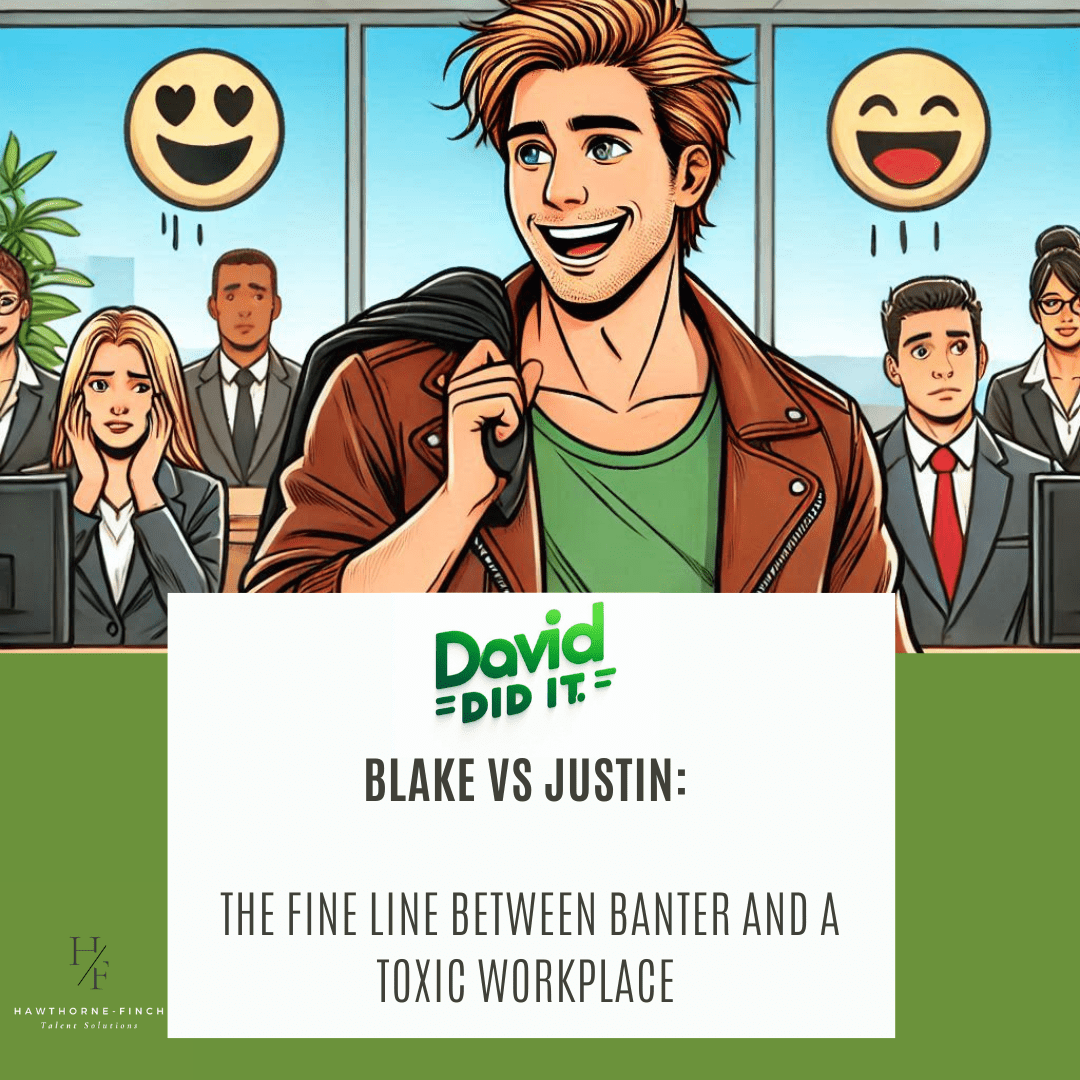
Blake Vs Justin: The Fine Line Between Banter and a Toxic Workplace
Hey everyone! It’s time for another dose of “David Did It!” Today, we’re diving into a rather important topic: how to spot a toxic employer before it’s too late. Grab your tea, get comfy, and let’s spill the tea on all things workplace dynamics.
Workplaces can be incredible spaces for growth, camaraderie, and achievement. But sometimes, they’re not. And the tricky part? It’s not always obvious. Toxic workplaces don’t always scream bullying or blatant misconduct. Sometimes, they’re subtler—a mismatch of values, a culture that values conformity over individuality, or an environment where “banter” crosses the line into something far less innocent.
The legal battle between Blake Lively and Justin Baldoni—a high-profile case that made headlines—highlighted exactly this. While details remain under wraps, the case sparked conversations about workplace dynamics and what constitutes inappropriate behaviour. It’s a reminder that workplace culture isn’t just about rules; it’s about respect, values, and shared understanding.
A Toxic Workplace Isn’t Always Obvious
When we hear “toxic workplace,” our minds jump to bullying, harassment, or micromanagement. But sometimes, toxicity is subtle. It’s when you feel the need to change who you are to fit in. When “banter” starts to feel like a coping mechanism rather than genuine laughter. When you’re asked to push your morals aside to “get the job done.”
I’ve been there. In my earlier career I thought I was having a laugh, joining in on the jokes, fitting into the team. But in hindsight, I see it differently—I was trying to survive in an environment that didn’t align with who I am. And while I convinced myself it was fine at the time, leaving made me realise how out of place I truly felt.
Recruitment Agencies and Their Role in Workplace Culture
Let’s talk recruitment for a moment. Agencies play a unique role in shaping workplace cultures. We act as the gatekeepers between candidates and companies, and that comes with responsibility.
When we’re assessing a candidate’s fit for a role, it’s not just about ticking off skills on a checklist. It’s about understanding the culture of the workplace they’re entering. Will this be a space where they can thrive, grow, and bring their whole self to work? Or will they spend their days masking who they are just to make it through the week? My objective as a Recruiter is to reduce and end the Sunday Blues, I want people to find the right company/role/team that is aligned to them (their people). This doesn’t mean drinking together every Friday or adding to a daft Birthday fund. It is about being comfortable to ask for support, admit when you made a mistake without fear of backlash or judgement and being in a place that supports your personal career goals and growth, not just the companies.
And it’s a two-way street. Employers, are you presenting an authentic picture of your workplace culture? Are you fostering an environment that’s inclusive, supportive, and aligned with your team’s values?
The Subtle Signs of a Toxic Workplace
So, let’s start with the basics—things that might seem normal at first but are actually red flags.
1. Walking on Eggshells Do you constantly second-guess yourself, worried about how your words or actions will be perceived? This could mean the culture isn’t as supportive as it should be. We want to work where we can be our fabulous selves without tiptoeing around.
2. Compromised Values Are you being asked to push your morals aside just to “get the job done”? Gurl, if you’re sacrificing what you believe in, it’s time to reconsider.
3. “Banter” as a Mask When that office banter starts feeling less like a laugh and more like a coping mechanism, it’s time to reflect on why. Genuine laughter shouldn’t feel like survival strategy.
4. Exhaustion Beyond the Usual Workload If the culture or environment is draining your energy more than the work itself, something’s seriously off. No job is worth that kind of burnout—remember, David Did It!
Building Better Workplaces
As employees, we have the right to expect respect, fairness, and inclusion. As recruiters and employers, we have the responsibility to create and sustain those environments.
Here are some tips to build healthier, happier workplaces:
- Set Clear Expectations: Define acceptable behaviour and communicate it clearly across the organisation.
- Encourage Openness: Create spaces where employees feel safe to share concerns without fear of backlash.
- Lead by Example: Leaders and managers should model the behaviour they want to see. (And if your behaviour is poor or hot/cold – don’t be surprised when you have a high staff turnover!)
- Check In Regularly: Conduct anonymous surveys or hold feedback sessions to gauge team morale and identify areas for improvement.
David Did It—So Can You
In the end, finding the right workplace or fostering the right culture isn’t about perfection; it’s about alignment. A great workplace is one where you can show up as yourself, contribute meaningfully, and leave at the end of the day feeling fulfilled, not depleted.
If you’re in a role or a culture that doesn’t feel right, trust your instincts. Life’s too short to spend your days shrinking yourself to fit someone else’s mould. As Ru Paul would say “If you can’t love yourself how in the Hell you gonna love someone else, can I get an Amen!”
At Hawthorne-Finch Talent Solutions, we’re committed to helping candidates and employers alike find their perfect match—not just in skills but in values, too.
So, as you look ahead to the future of your career or your team, ask yourself: Are you fostering an environment where everyone can thrive? And if the answer is no, let’s talk about how to change that.
Because trust me, David did it—and so can you.